Car audio · Dr. Volt
Let the beats rock: why speakers are the best first upgrade
Unless your car came with a premium factory system, the stock speakers were chosen to hit a price — thin paper cones, small magnets and cheap surrounds. That’s why music sounds tinny at low volume and crackles when you turn it up.
Keep reading +
Replacing the speakers is often the single biggest improvement per dollar. Quality aftermarket speakers use stiffer cones, better tweeters and more efficient motors, so they play cleaner and louder on the same radio power.
Coaxial speakers drop in where the factory ones were and are a great budget move. Component sets separate the tweeter from the woofer so you can aim the high frequencies toward the listener for a wider, more “in front of you” soundstage.
Add a little sound-deadening behind the door panel and you’ll lose rattles and gain mid-bass you didn’t know your car could make. When you’re ready, an amplifier and subwoofer finish the job.
Car audio · Dr. Volt
So you want some power: what an amplifier actually does
Customers ask all the time how to get more out of their existing system without starting over. In most cases the answer is an amplifier.
Keep reading +
Your radio sends out a low-level signal. An amplifier turns that into a high-level signal strong enough to properly drive speakers and subwoofers — the built-in amp in most radios only puts out a modest amount of clean power.
More clean power means less distortion, more dynamic range and the ability to run better speakers to their potential. Amps range from compact 4-channel units that hide under a seat to monoblock amps built for big subwoofers.
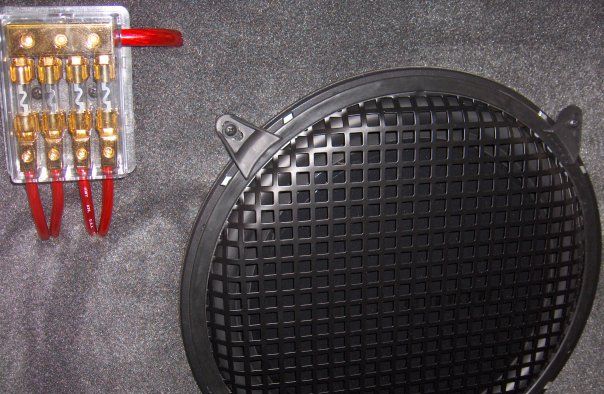
Matching matters: the amp’s output, the speakers’ power handling and the vehicle’s electrical system all need to agree. We size the wiring, fusing and grounding correctly so your system is loud, clean and safe.
Window tint · Dr. Volt
To be cool or not to be cool? How window tint works
Window tint is a thin film — usually a clear polyester base with an even layer of dyes, metals or ceramic particles — bonded to the inside of your glass.
Keep reading +
Once applied, the film changes how light and heat pass through the window. Depending on the film, that means less glare, a cooler cabin in summer, more privacy and protection from the UV that fades interiors and damages skin.
Dyed films are affordable and darken nicely. Metalized films reflect more heat but can interfere with radio and GPS signals. Ceramic films offer the best heat rejection without signal interference.
Rhode Island sets light-transmission limits for each window, and inspection checks them. We’ll help you pick a film and shade that gives you the look and comfort you want — legally.
Remote start · Dr. Volt
The hidden part of every remote starter: the bypass module
Here’s what a lot of ads don’t tell you: most vehicles need a bypass module in addition to the remote starter, and it usually isn’t included in the advertised price.
Keep reading +
Starting in the late 1990s, manufacturers added factory anti-theft immobilizers. A chip in your key talks to the car, and without it the engine won’t start — or will shut right back off.
A bypass (or interface) module securely tells the vehicle the correct key is present only during a remote start. Once you get in and put the key in or press the start button, the factory security takes back over.
Modern programmable modules also unlock extras like door lock control, trunk release and factory-remote integration. At our shop the bypass module is included in your quote, so the price we give you is the price you pay.
Radios · Dr. Volt
From AppRadio to CarPlay: putting your phone on the dash
Years ago, Pioneer’s AppRadio was one of the first radios to put smartphone apps on a dashboard touchscreen. Today Apple CarPlay and Android Auto have made that experience standard — and you can add it to almost any vehicle.
Keep reading +
Your phone already does navigation, music, podcasts and messaging. CarPlay and Android Auto mirror those apps on a large, driver-friendly screen with voice control, so your phone can stay in the cupholder.
Many units now connect wirelessly. Add a backup camera, keep your steering-wheel buttons with the right interface, and even retain factory features like climate displays on supported vehicles.
It’s one of the most popular upgrades we do — and one that makes an older car feel brand new every time you get in.