Why shoot slugs?
Modern PCP air rifles produce far more power than diabolo pellets were designed for. A slug's solid, aerodynamic shape gives it a much higher ballistic coefficient (BC) than a pellet, so it holds velocity and energy farther downrange, drops less and drifts less in the wind.
AVS slugs began as a solution to one problem: shooting long range in high winds. They're swaged from 99.9% pure lead — soft enough to seal gently in the rifling and to expand dramatically on game.
Finding your diameter
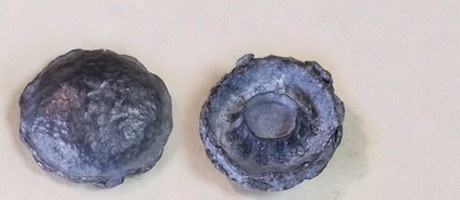
This is the single most important step. Slugs need to match your barrel's groove diameter (the bottom of the rifling), not the bore diameter. Because barrels vary between manufacturers — and sometimes between barrels of the same model — AVS offers each caliber in multiple diameters.
How to slug your barrel
- Make sure the rifle is unloaded and de-gassed or safely disabled.
- Lightly lubricate the bore and an oversized soft lead slug or pellet skirt.
- Gently tap it into the breech and push it through the full length of the barrel with a brass or wooden rod.
- Measure the widest point (the groove marks) with a micrometer reading to 0.0001".
- Choose the AVS diameter that matches, or one that's half a thousandth larger.
AVS diameter chart
| Caliber | 2S Ogive & standard | ELR Round Nose |
|---|---|---|
| .22 | .217 · .2173 · .2183 · .2193 · .2213 · .223 | .2173 · .2183 · .2193 · .2213 |
| .25 | .2493 · .2503 · .2513 · .2523 · .2533 · .254 · .2553 · .2573 | .2503 · .2513 · .2523 · .2533 · .254 |
| .30 | .3003 · .3013 · .3033 · .3063 · .3083 | .3003 · .3013 · .3033 · .3063 |
| .35 | .3563 · .3573 · .3583 | — |
Weight & twist rate
A slug has to spin fast enough to stay stable. Heavier slugs are longer, and longer slugs need a faster twist rate (for example 1:16" or 1:18") to stabilize. Slower-twist barrels generally prefer shorter, lighter slugs.
- Signs of instability: keyholing (oblong holes), fliers, or groups that open up badly with distance.
- Check length: heavier slugs are longer — make sure they fit your magazine or single-shot tray before ordering.
- Tune velocity: many barrels have a "sweet spot." Small regulator or hammer adjustments can turn a good group into a great one.
Choosing a base
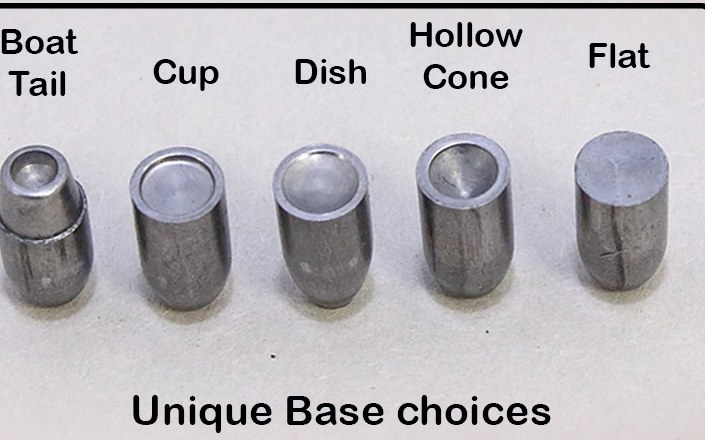
| Base | Works best with |
|---|---|
| Cup | Moderate to high-power PCPs with shorter, lighter slugs. |
| Dish | High-power PCPs; can also work in moderate-power guns with a faster twist rate. |
| Flat | Longer, heavier slugs in very high-power guns with a matching twist rate. |
| Dimple Boat Tail | Long-range shooting. Generally needs a faster twist rate to stabilize. |
| Hollow | Offered by request, but we haven't seen consistently good results with it. |
Nose profiles
2S Ogive
The proven AVS profile. A two-stage ogive that balances BC, accuracy and reliable hollow point expansion — a great all-round hunting and target slug.
ELR Round Nose
Built for extreme long range. The rounded nose and longer bearing surface boost BC for a flatter trajectory and better wind resistance. Available as hollow point or solid nose, with pick-your-base or Dimple Boat Tail options.
Power ranges
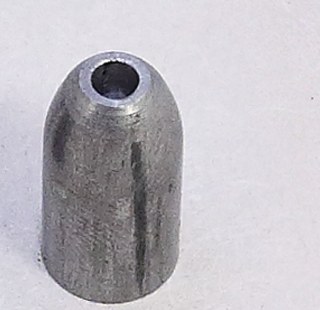
Slugs need energy to perform. As a starting point, AVS .22 slugs perform best from about 30–60 ft-lbs, and .25 slugs from about 50–80 ft-lbs. The .30 and .35 slugs are designed for high-power and big-bore PCPs.
Where to start
If you've measured your barrel but aren't sure about weight or base, a sample pack is the fastest way to find out — pick three bases, get 40 of each, and let your target decide. Still stuck? Email us with your rifle, barrel and power level and we'll point you in the right direction.