
Your first visit, made easy.
Here’s what to expect — plus a little chiropractic education, because our mission is to help you understand your body’s potential to heal itself.
Four simple steps.
Call or request
Schedule by phone or online. Emergency appointments are available.
Consultation & exam
We listen to your history and perform a hands-on chiropractic and postural exam.
X-ray if needed
On-site diagnostic imaging helps us see the full picture.
Your care plan
We explain what we found and begin gentle, personalized care.
Common questions.
What happens at my first visit?
We’ll review your health history, perform a chiropractic exam including posture photos and, if needed, X-rays — then explain what we find and recommend a care plan.
Is chiropractic covered by my insurance?
Chiropractic is covered by most insurance plans, including workers’ compensation, personal injury and auto accident claims. Call us and we’ll help check your coverage.
Is chiropractic safe for kids and pregnant women?
Yes — our versatile, gentle techniques are used to effectively treat everyone, including children, pregnant and post-partum women, and the elderly.
Do I need a referral?
No referral is needed. Call to schedule — emergency appointments are available.
What should I wear?
Comfortable clothing you can move in. Avoid belts with large buckles or dresses if possible.
What is a subluxation?
The word comes from the Latin for “to dislocate” (luxate) and “somewhat or slightly” (sub).
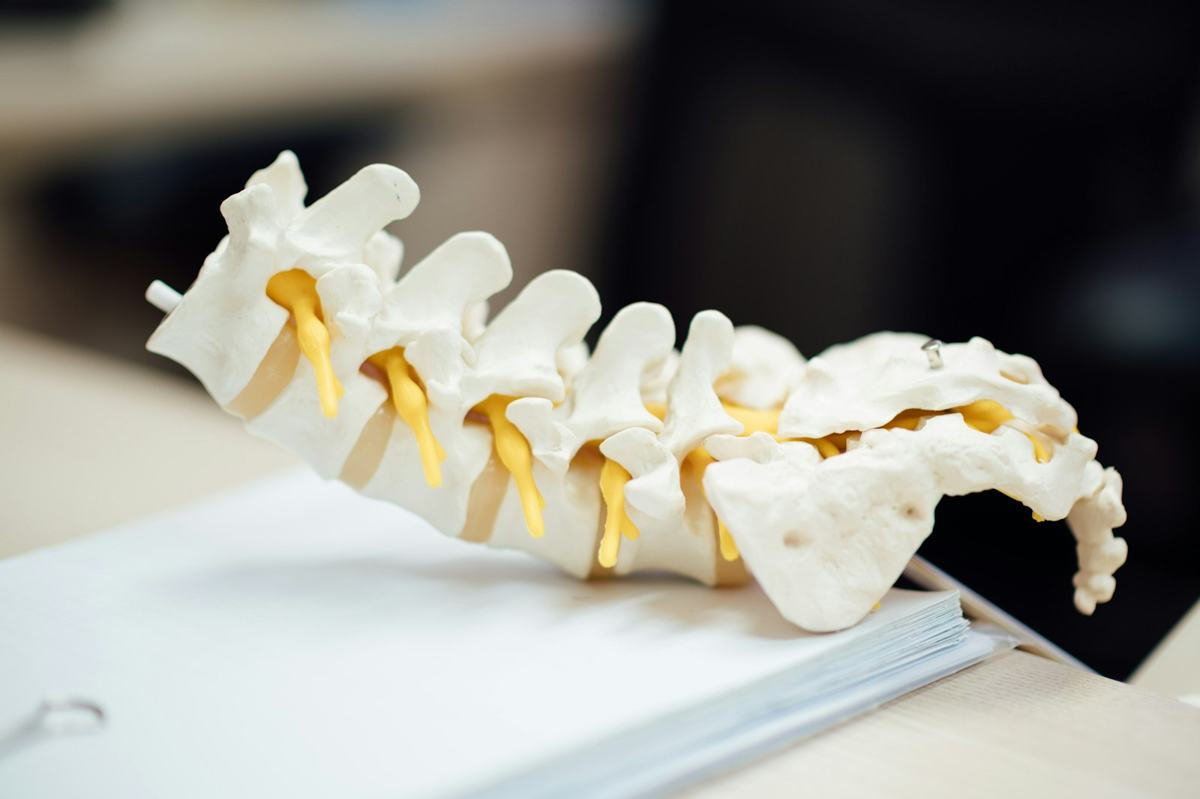
A subluxation means a slight misalignment or biomechanical malfunction of the vertebrae — the bones of the spine. These disturbances may irritate nerve roots and blood vessels that branch off the spinal cord between each vertebra, and that irritation may cause pain and dysfunction in muscle, lymphatic and organ tissue, as well as imbalance in normal body processes.
Your spine, region by region.
Tap a region to see where its spinal nerves travel. (This replaces the old Flash animation, which no longer works in modern browsers.)
Cervical · C1–C7 · neck
The seven vertebrae of the neck support your head and protect nerves that travel to the head, face, shoulders and arms.
Thoracic · T1–T12 · mid back
The twelve vertebrae of the mid back anchor your ribs; nerves here travel to the chest and abdomen.
Lumbar · L1–L5 · low back
Five large vertebrae carry much of your body weight; their nerves travel to the hips, legs and feet.
Sacrum & coccyx · Base of the spine
The triangular sacrum and the coccyx form the base of the spine and connect it to the pelvis.
Educational overview of general nerve pathways. Your doctor will explain how your exam findings relate to your symptoms.
Chiropractic terms, explained.
Of short duration and relatively severe.
Moving a joint beyond its passive range of motion limit by means of a sudden thrust or impulse, usually accompanied by an audible "popping" sound. Otherwise known as spinal manipulation.
Uppermost and most freely movable bone in the spinal column.
Study of the relationship between the structure and function of the nervous system.
The vertebrae of the neck, generally composed of 7 bones.
Symptoms persisting for a long period of time.
The application of ice, cold towels, compresses, and ice massage to reduce the temperature of the tissues on or below the surface of the skin.
Shortwave electro-magnetic energy used to raise the temperature of soft tissues beneath the skin.
The cartilage that seperates the spinal vertebrae and acts as a cushion to absorb shocks to the spine.
Small amounts of electrical current administered at the site of a soft tissue injury to block pain.
The joint surface of a spinal bone, facing adjacent bone above or below.
Being held in a fixed position. Area of the spine of a joint with limited movement.
State of optimal physical, mental and social well-being.
Abnormal soft tissue (tendons, ligaments, intervertebral discs) function.
The lateral opening through which spinal nerve roots exit the spinal column.
The vertebrae of the lower back, usually 5 bones.
The assessment and treatment of the soft tissues and joints of the body by hands-on manipulation.
Abnormal muscle function.
Abnormal nervous system function.
The act of examining the spine with your fingers.
The abnormal function of the spine and body.
Pain radiating into the lower or upper extremities. This pain is often deep and steady. It is reproducible with activities such as sitting or walking. Radicular pain may be accompanied by muscle weakness, numbness and tingling and loss of specific reflexes.
The range, measured in degrees, through which a joint can be moved.
The triangular bone at the base of the spine, composed of fused vertebrae.
Abnormal motion or position of spinal bones.
Moving a joint beyond its passive range of motion limit by means of a sudden thrust or impulse, usually accompanied by an audible "popping" sound.
The posterior protruding part of the vertebrae that can be seen or felt when examining the spine.
Using hot packs, warm moist towels and heating pads to raise the temperature of soft tissues just below the surface of the skin.
The part of the spinal column from the base of the neck to about six inches above the waist. Contains 12 vertebrae.
The lateral protrusions of bone from the vertebrae which serves as an attachment for powerful muscles and ligaments.
Therapeutic treatment using high-frequency sound waves administered in region of soft tissue injuries.
Any of the individual bones of the spinal column.
Condition in which the vertebrae lose their normal position and motion due to diverse causes such as trauma, stress or chemical imbalance.
Ready to feel like yourself again?
New patients are always welcome — and emergency appointments are available. Call us or request a visit online.