

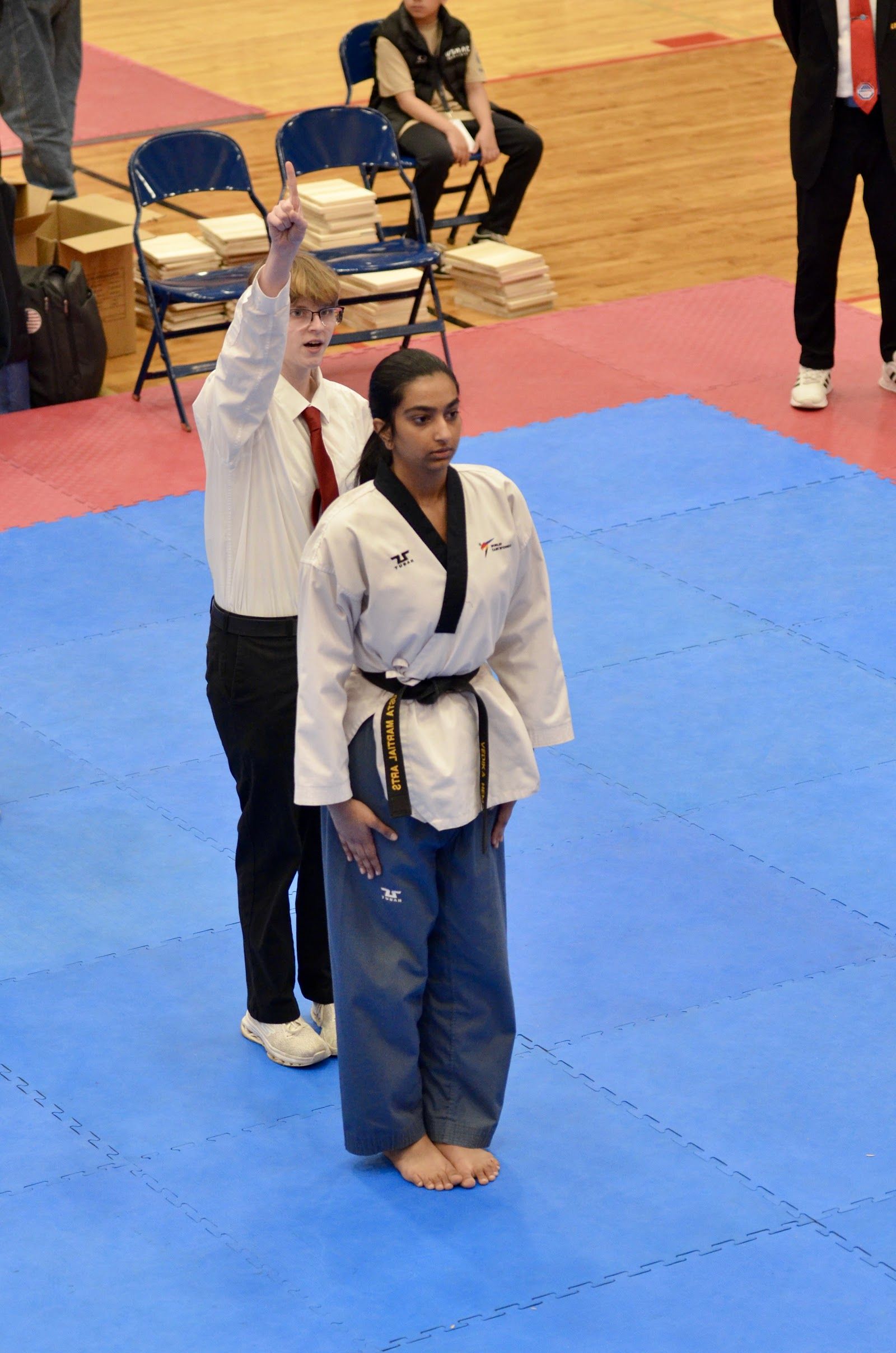
The path to black belt — and beyond
A clear, structured curriculum shared by USTA schools: 14 color-belt ranks, black belt levels, and testing that builds skill and character together.
14 ranks. About three years.
Students progress from white belt through senior red and danbo before earning their black belt — typically in about three years of consistent training. Each rank adds new stances, kicks, forms and a virtue to live by.
Level testing every 3–4 months.
After black belt, students advance through 1st Dan levels 0–6 and 2nd Dan levels 0–6 toward 3rd Dan. Each level test has four core parts:
1 · Questions & Virtue
Each level has a theme — a virtue such as integrity, courtesy, perseverance, loyalty or leadership. Students study a story and questions, then answer and present at testing, building public-speaking confidence.
2 · Koryo Poomsae
The first black belt form, performed at every 1st Dan level test. It demands concentration, flexibility and precision.
3 · Palgwe Poomsae
A new Palgwe form is learned at each level, growing in difficulty as students advance.
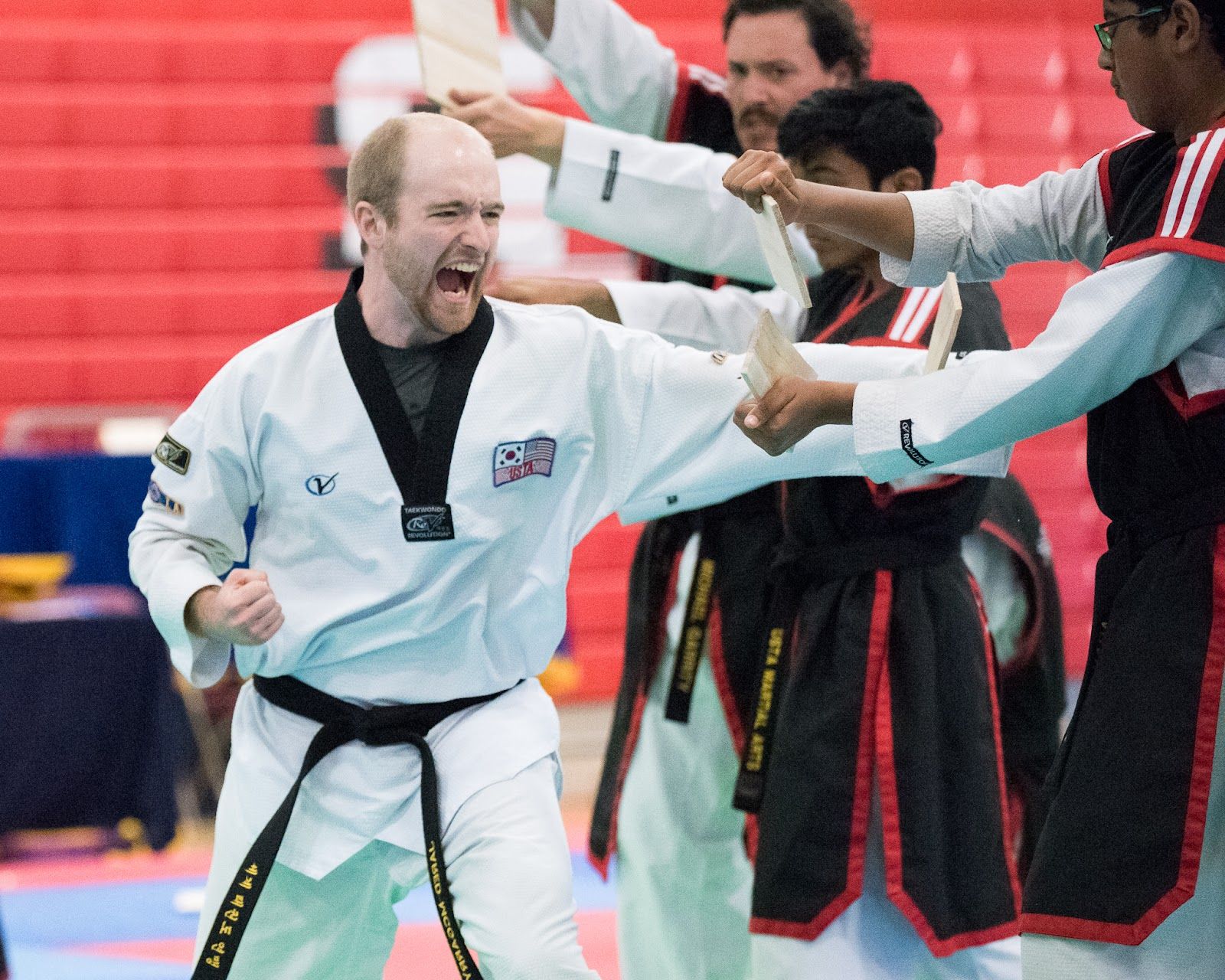
4 · Kicking, Self-Defense & Breaking
From roundhouse and back-spin hook kicks up to a 360° jump back-spin hook kick; partner self-defense; and a breaking routine that adds one board every level.
2nd Dan · Team Testing
2nd Dan candidates test in teams of three — poomsae, hand techniques, one-step sparring and 33 nunchaku techniques, all performed in perfect sync.
What every USTA student commits to.
- To build true confidence through knowledge in the mind, honesty in the heart, and strength in the body.
- To keep friendship with one another, and to build a strong and happy community.
- Never fight to achieve selfish ends, but to develop might for right.
From the 2nd Dan study guide
- Honesty
- To tell the truth at all times
- Strength
- Physical, mental, or moral power
- Knowledge
- Understanding gained through study and experience
- Friendship
- Love and honesty towards another person who does the same in return
- Community
- Our neighborhood and the people who live in it
- Might for right
- Strength and hard work towards a goal that is morally good
- 6 basic positions
- Attention · Bow · Ready Stance · At Ease · Listen · Fighting Stance
- Uniform (dobok)
- White uniform with the USTA logo on the left side of the chest
- Giving & receiving
- Always give and receive items with both hands and a bow — showing respect and appreciation
- Responding properly
- Stand at attention and answer “Yes Sir” or “No Sir” clearly
- Introducing yourself
- Make eye contact, state your name clearly with a bow or handshake, repeat the other person's name and say “It's a pleasure to meet you.”
Black belts lead at home & in the community.
Weekly Job List
Students track chores and responsibilities each week, building ownership and helping at home.
Service Card
Logging service to parents, friends, teachers, school and nature — encouraging help “anywhere, anyone, anytime.”
Student Pledge & Essays
Black belts memorize the 10-rule Student Pledge and write essays reflecting on their journey. Read them →
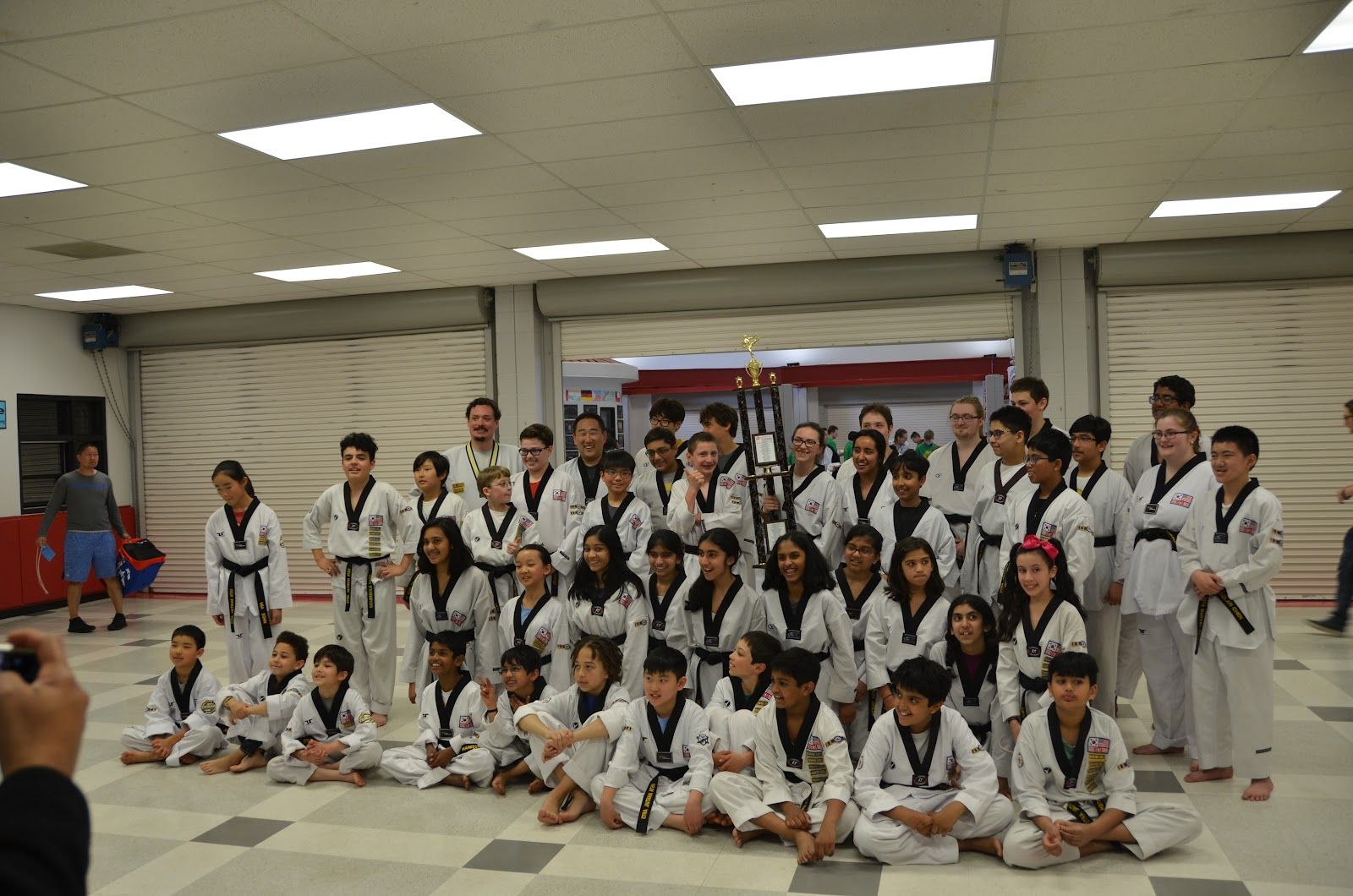
Try TaeKwonDo with our 2-Week Trial.
Ask about our Trial Lesson Special. Meet Master Hwang, see a real class, and find the right group for your child — or yourself.