

Family owned.
Built on trust since 1999.
Recognizing the importance of an excellent, honest reputation, we strive every day to earn our place as your go-to plumbing company.
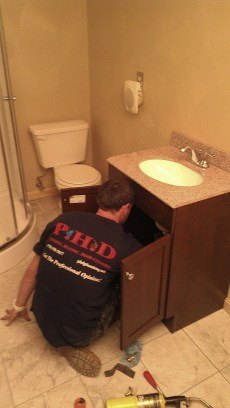
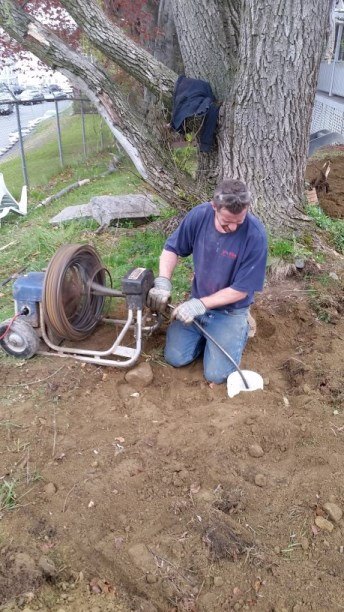
Your plumbing company — for everything.
Established in 1999, P.H.D has earned the trust of many satisfied customers across the Merrimack Valley and Southern New Hampshire.
Family owned and operated, we’re completely devoted to customer service and excellent workmanship. We take pride in our quick response to every call and in being on time for scheduled appointments.
“Our goal is to be your plumbing company — the one you turn to for all your plumbing, heating, air conditioning and drain cleaning needs. One call, we do it all.”
Call (978) 556-5617Straight answers from a master plumber
Decades of real-world questions from our customers, answered.
Plumbing FAQs
Basement BathroomIs a basement bathroom possible even though my sewer piping is higher than the basement floor?
Yes — but the most challenging part, as with any plumbing project, is the venting. The four major parts of a plumbing system are water, drainage, venting of drain piping and venting of the bathroom space. Proper venting keeps sewer gases and airborne contaminants out of your home.
Most basement bathrooms sit below the building drain (sewer main) and need a pump system. The pump chamber must be vented, as do the new fixtures, tied into existing vents (six inches above the highest fixture) or a new vent through the roof. Most homes built after the 1990s have future vents in the basement. Without one, be prepared for a sizable project.
Ground WaterI get water in my basement during heavy rain. How do I stop it?
The most economical solution is a sump pump system installed about two feet below the surface where water is most often found. If that doesn’t solve it, an interior perimeter drain — cut into the floor along the foundation walls with drain pipe and stone — diverts ground water to the sump before it reaches your finished floor.
Where gutter runoff and low-sloping ground saturate the foundation, an outdoor perimeter drain two to three feet below grade can direct water away into a dry well or a lower part of the property.
High Water PressureMy plumber says my water pressure is high (110 psi). Is that an issue?
Yes. High pressure contributes to most plumbing problems, higher gas and water bills, and flood damage — burst washing machine hoses are the leading cause of household floods, and high pressure is the leading cause of burst hoses. Most codes cap household pressure at 80 psi.
A pressure regulator (reducer) on your water main lowers flow at every fixture, trims your water bill, and can reduce gas or electric water heating costs by roughly 5%.
Low Water PressureWhat is normal water pressure? My shower barely trickles.
Homes on hilltops are more likely to have low pressure (below 49 psi), which a booster pump and tank can raise to around 60 psi. But a weak shower isn’t always low pressure — calcium, lime and rust can clog shower heads. Have a plumber test your pressure before taking action.
Toilet RepairsOur older toilet matches the bathroom but doesn’t work as well. Can it be repaired?
Most toilets can be rebuilt by removing the tank, cleaning it out and replacing all the internal parts. Rim holes can be gently rodded to clear calcium buildup. Once rebuilt, it should work as good as new.
Water Main Shut-OffHow do I shut off all the water in a plumbing emergency?
Your main is usually in the basement at the front of the house, on the foundation wall or coming up through the floor, connected to the water meter with a shut-off valve before (and sometimes after) the meter. Brace the pipe when turning the valve — older piping can snap at the wall or floor. If water keeps running at full force 90 seconds after shutting the valve, call us or your local DPW right away.
Water Heaters FAQs
SizingWhat size water heater do I need?
Size depends on demand, usage and recovery, plus high-capacity fixtures like whirlpool tubs. Indirect and direct-vent units recover faster than power-vented units, which recover faster than chimney-vented ones. Tankless heaters have zero recovery time — they heat on demand and only use energy while hot water is running, making them the most efficient choice for high demand.
InstallationCan anyone install a water heater?
No. Water heaters carry many safety requirements and local codes, and skipping a single safety device can lead to catastrophic results. It is against the law for an unlicensed person to install plumbing fixtures in Massachusetts and New Hampshire.
Flood PreventionHow do I prevent a flood in my finished basement if my water heater fails?
Water heaters typically last 6–15 years and usually fail without warning — some crack open and release hundreds of gallons. The best protection is a Flood Master device: a sensor beside or under the heater triggers an alarm and a solenoid valve shuts off the water supply the moment it detects water.
Steam Boiler Hot WaterMy boiler’s tankless coil failed. Do I have to replace it?
Replacing the coil is one option, but coils clog with sediment over time and deliver fluctuating temperatures. Our favorite fix is an indirect water heater (SuperStor, Amtrol, etc.) on a separate boiler loop — recovery is very fast, especially in winter when the boiler is at peak performance.
MaintenanceShould I have a maintenance plan for my water heater?
Yes — maintenance extends tank life. Draining about three gallons from the bottom drain every couple of years removes sediment. Replacing the anode rod about every four years is the best way to get more life from the tank, since the rod corrodes in place of the steel. We recommend a licensed plumber for anode work, as it can affect your warranty and sometimes requires cutting and soldering.
Tankless vs. TankWhat are the benefits of tankless over a conventional tank?
Efficiency: gas tankless units are about 95% efficient vs. roughly 60% for tanks, with no standby loss. Venting: they draw and exhaust air directly outdoors — no chimney needed. Space: a wall-mounted unit is about 18″×20″ and 115 lbs vs. a 475-lb full 40-gallon tank. Warranty: Navien stainless heat exchangers carry 15-year residential warranties vs. 6 years on standard tanks.
The one advantage of a gravity-vented gas tank: it makes hot water without electricity during power outages.
Heating & AC FAQs
Leaking Boiler PipeWhy is the pipe attached to my boiler leaking?
That’s most likely the temperature/pressure relief valve — a safety device that blows off (commonly at 30 psi on residential systems) to prevent catastrophic failure. For your safety, shut off power and water to the boiler and call a licensed professional to find the root cause.
Boiler & Furnace MaintenanceHow often should my boiler or furnace be cleaned?
Gas furnaces and boilers every four to five years; oil-fired boilers every two years. Pressure regulators, backflow valves, relief valves and expansion tanks should be replaced every 10–12 years. Evaporator coils, condensers and heat pumps should be cleaned every three to five years, since pollen and dust reduce efficiency.
Adding ACCan I add air conditioning to my heating furnace?
Most furnaces can be retrofitted with a cased or uncased evaporator coil, depending on the furnace’s age, blower motor and controls. Have an HVAC specialist assess the system first.
Heat PumpsWill a heat pump work in a New England winter?
Heat pump technology has come a long way — many mini-splits now operate effectively in harsh winter conditions, while some whole-house split systems may struggle. A hybrid gas/electric system that switches over in freezing temperatures is often worth considering. We’ll help you weigh the variables.
Radiant HeatCan I add radiant heat to my basement without ripping up the concrete?
Yes. We prefer installations that keep tubing off the concrete. Some of our best radiant jobs use a floating floor system that acts as both vapor barrier and insulator, with slotted radiant track for even heat across the whole space.
Frozen BaseboardA baseboard on my four-season porch freezes. How do I prevent it?
The most cost-effective fix is pumping non-toxic antifreeze into the heating system (except systems with aluminum, CPVC or galvanized steel). It also protects against corrosion and lubricates moving parts, lasting 6–7 years. Alternatively, we can create a separate zone for that room with its own thermostat, or add an exercise relay to keep water moving.
Rebates & IncentivesWill I qualify for rebates on new heating or hot water equipment?
Heat pump water heaters continue to be incentivized, while rebates on high-efficiency gas equipment are phasing out in favor of heat pumps. Check with your utility, or in Massachusetts visit Mass Save. See our Specials page for current programs.
Gas FAQs
Gas SmellI smell gas in my basement, but it goes away. What could it be?
Your movement dilutes the gas with surrounding air, making it seem gone. Pilot tubes and older gas piping commonly develop small leaks. There’s no such thing as a good gas leak — call your gas company or a gas professional as soon as possible.
Gas FireplaceCan I convert my wood-burning fireplace to gas?
Yes, with proper planning. Measure the firebox (height, depth, front and back width) and choose a gas log that fits safely and is legal in your state. Your gas piping may need upgrading for the added load. Gas logs make a great backup heat source, since their valves don’t need electricity.
Oil to Gas ConversionHow do I switch from oil to gas?
Call your gas supplier to confirm there’s a supply line on your street and ask about conversion incentives. Once they run piping to your building, we coordinate the interior gas piping and equipment. After the city inspector signs off and tags the piping, your supplier can install the new meter. Propane is an alternative where street gas isn’t available.
Ventless HeatersWhat is a ventless gas heater, and is it safe?
Ventless heaters release all combustion byproducts into the room, so they’re nearly 100% efficient — but manufacturers recommend opening a window during use. They’re legal in most states as secondary heat only. Our opinion: use them for ambiance, not as a heat source.
Drains & Sewer FAQs
Cross-BoreHow do I know if my sewer has been cross-bored?
Video inspection is the best way. Our camera records the inside of the pipe to identify foreign objects, cross-bores or broken sections, while the transmitter and locator pinpoint the exact location for repair planning or claims.
Clogged Kitchen DrainWhy does my kitchen drain clog so often?
Garbage disposers lead people to send too much food down the drain. Use the disposer only for plate scraps, with two parts water to one part solids. Soap scum, dirt and grease also build up — a monthly drain treatment helps prevent it.
Tree RootsHow did tree roots get into my sewer?
Roots seek water and nutrients and will find the smallest crack, then enlarge it. Left untreated, they return every two to four years. Professional removal followed by a root treatment keeps them at bay; replacing or spot-repairing the line with PVC eliminates the problem. Cameras and locators make repairs far less invasive.
Liquid Drain OpenersWhere can I get professional-strength drain acid?
Strong acids are sold only to licensed, insured plumbers because they can eat through old steel pipe or soften PVC joints. We recommend mechanical cleaning — snake, rod, pressure or plunger — and environmentally safe enzyme products like ProClean for maintenance.
What Not to FlushWhat shouldn’t be flushed down the toilet?
We’ve pulled out toothbrushes, diapers, kitty litter and potting soil — but the most common culprits are “flushable” products: paper towels, wipes and feminine products. If it doesn’t break up shortly after contact with water, it will accumulate and clog the drain.
Cities & towns we service
PHD Plumbing serves Northern Massachusetts and Southern New Hampshire.
MANorthern Massachusetts
NHSouthern New Hampshire
Need a plumber you can trust?
Call for fast, reliable service from a licensed master plumber. Ask about our multiple-job discounts.